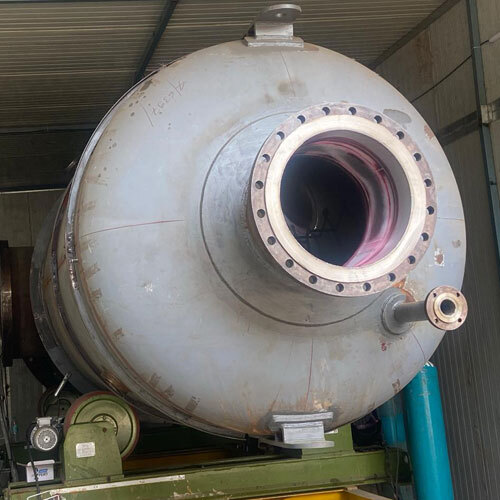
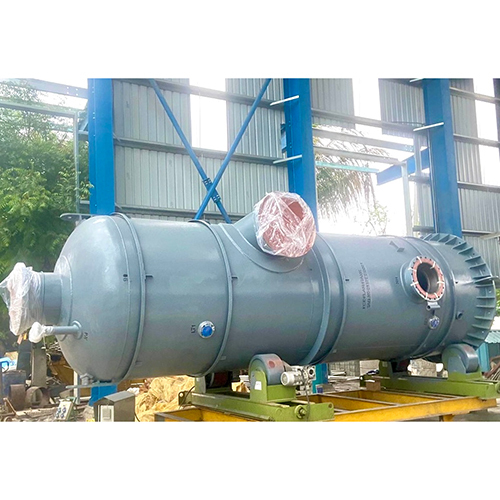
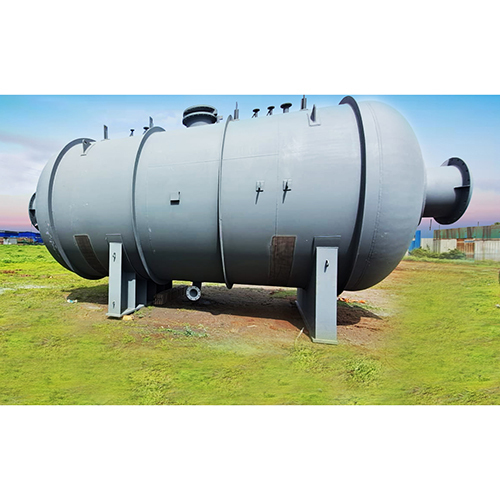
The cladded vessel is a high-performance industrial solution crafted from durable stainless steel to ensure longevity and robustness. With a sleek silver finish, this vessel is specifically designed for demanding industrial applications, offering unparalleled resistance to corrosion and wear. It is perfect for environments requiring top-notch reliability and efficiency. Manufactured under stringent quality standards, this vessel is delivered in brand-new condition and is ideal for industries that seek to optimize processes with dependable equipment. As a manufacturer, service provider, and supplier, these cladded vessels cater to a wide range of industrial needs, promising excellent performance and durability in diverse operational settings.
A cladded vessel (or clad vessel) is a type of pressure vessel that has a layer of corrosion-resistant material (cladding) bonded to a base material, usually carbon steel or low alloy steel. This combination provides both mechanical strength and corrosion resistance which is often needed in chemical, petrochemical, or oil and gas industries.
Why Use a Cladded Vessel?
- Cost efficiency: Corrosion-resistant alloys (like stainless steel, Inconel, or titanium) are expensive. Using them as a full-thickness material would be costly. Instead, only a thin corrosion-resistant layer is bonded to a cheaper structural metal.
- Corrosion protection: Protects the vessel interior from corrosive substances (e.g., acids, seawater, or aggressive chemicals).
- Mechanical strength: The base metal (like carbon steel) handles the pressure and mechanical load.
Common Cladding Materials:
| Base Material | Cladding Material |
| Carbon Steel | Stainless Steel (304, 316) |
| Low Alloy Steel | Inconel, Hastelloy, Monel |
| Others | Titanium, Tantalum, Zirconium |
Cladding Methods:
- Roll Bonding / Explosion Bonding: Sheets of the corrosion-resistant metal are bonded to the base metal using pressure and/or explosion.
- Weld Overlay: Cladding is applied by welding a corrosion-resistant alloy layer on the surface.
- Mechanical Cladding: Cladding material is mechanically attached, sometimes used for non-pressurized applications.
Applications:
- Heat exchangers
- Reactors
- Columns and towers
- Storage tanks
- Offshore pressure equipment
FAQs of Cladded vessel:
Q: What material is used for the cladded vessel?
A: The cladded vessel is made from stainless steel for superior durability and corrosion resistance.
Q: In what condition is the cladded vessel supplied?
A: The cladded vessel is supplied in brand-new condition.
Q: What is the color of the cladded vessel?
A: The cladded vessel comes in a sleek silver color.
Q: What industries can benefit from using cladded vessels?
A: Cladded vessels are specifically designed for a wide range of industrial applications.
Q: What roles are involved in the supply of cladded vessels?
A: The product is supplied by a manufacturer, service provider, and supplier to ensure reliable service and delivery.







 Send Inquiry
 Send Inquiry



 English
 Spanish
 French
 German
 Italian
 Chinese (Simplified)
 Japanese
 Korean
 Arabic
 Portuguese